
The complete guide
Floor Sofa Buying Guide, How to Choose a Low Seat That Actually Supports You
The problem with the corner nobody sits in
Nearly every home has a spot that stays empty. The corner behind the door. The end of a long bedroom. The strip of floor under a window where a proper armchair would block the light. You know you could be using it, but every piece of furniture you look at is either too tall, too deep, or needs a van and an afternoon to get it inside.
Floor seating solves that, in theory. In practice a lot of it is disappointing. Beanbags swallow you and offer nothing for your back. Floor cushions are fine for ten minutes and numbing after thirty. Low ottomans have no backrest at all. What people actually want is a real seat that happens to sit close to the ground, and that is a narrower category than the search results suggest.
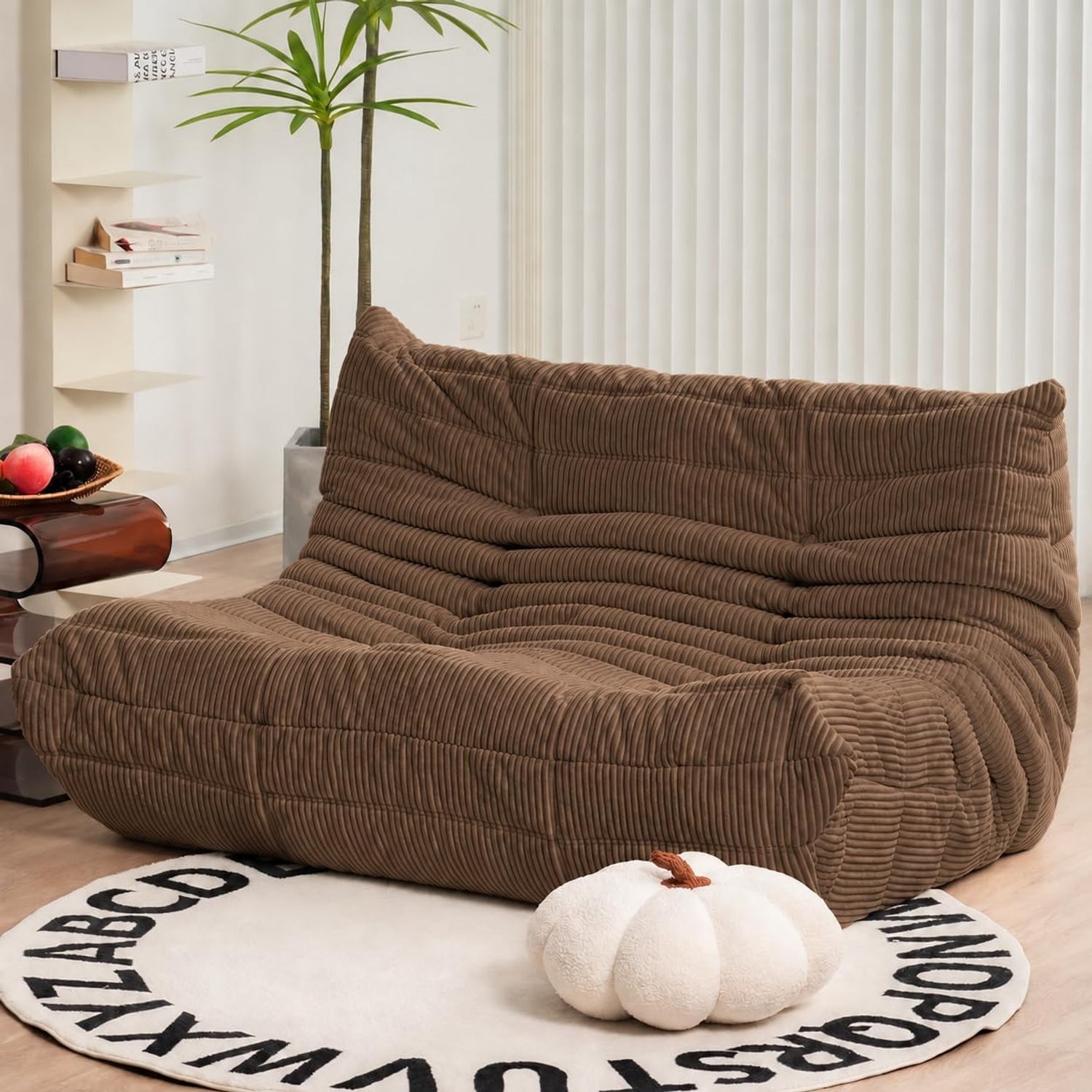
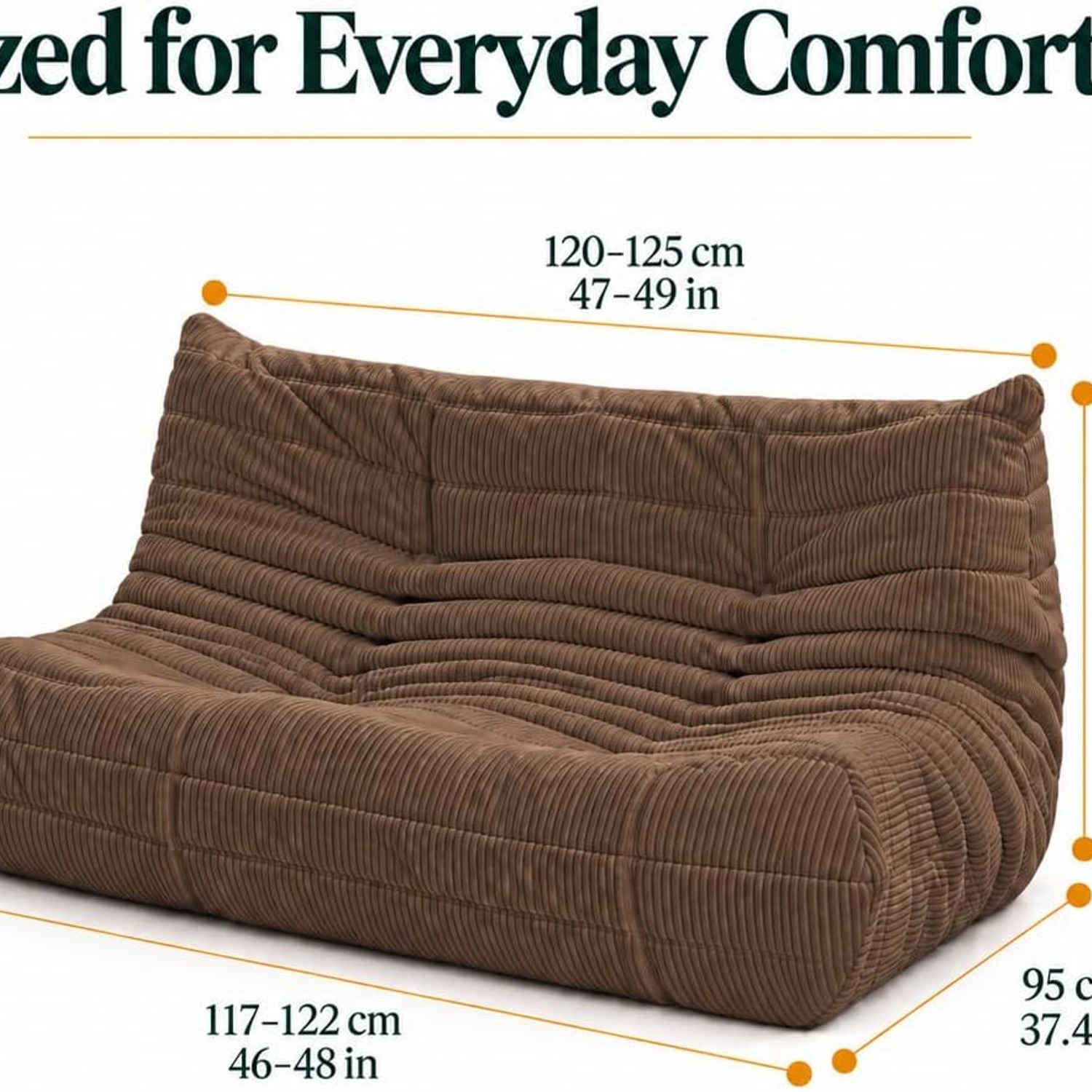
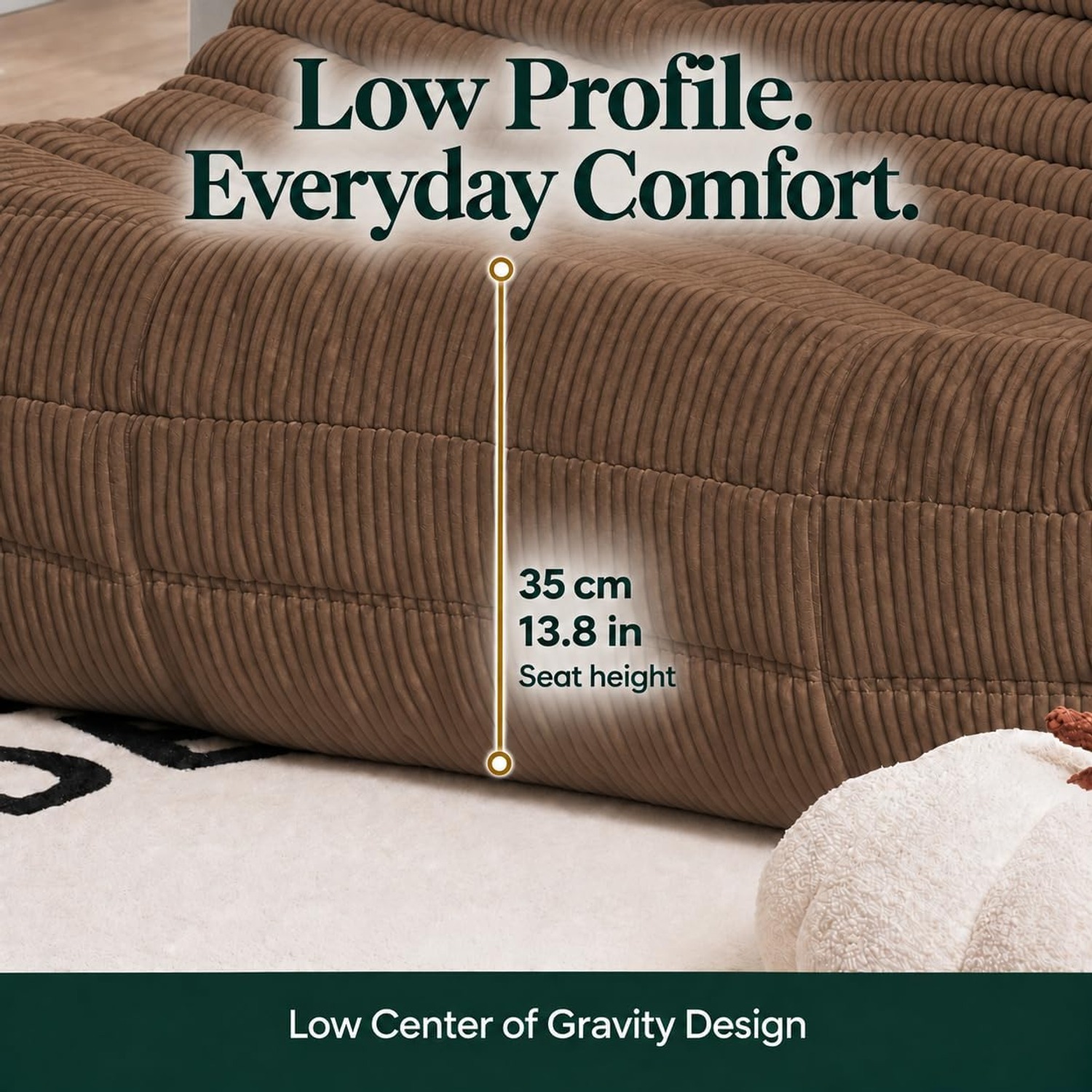
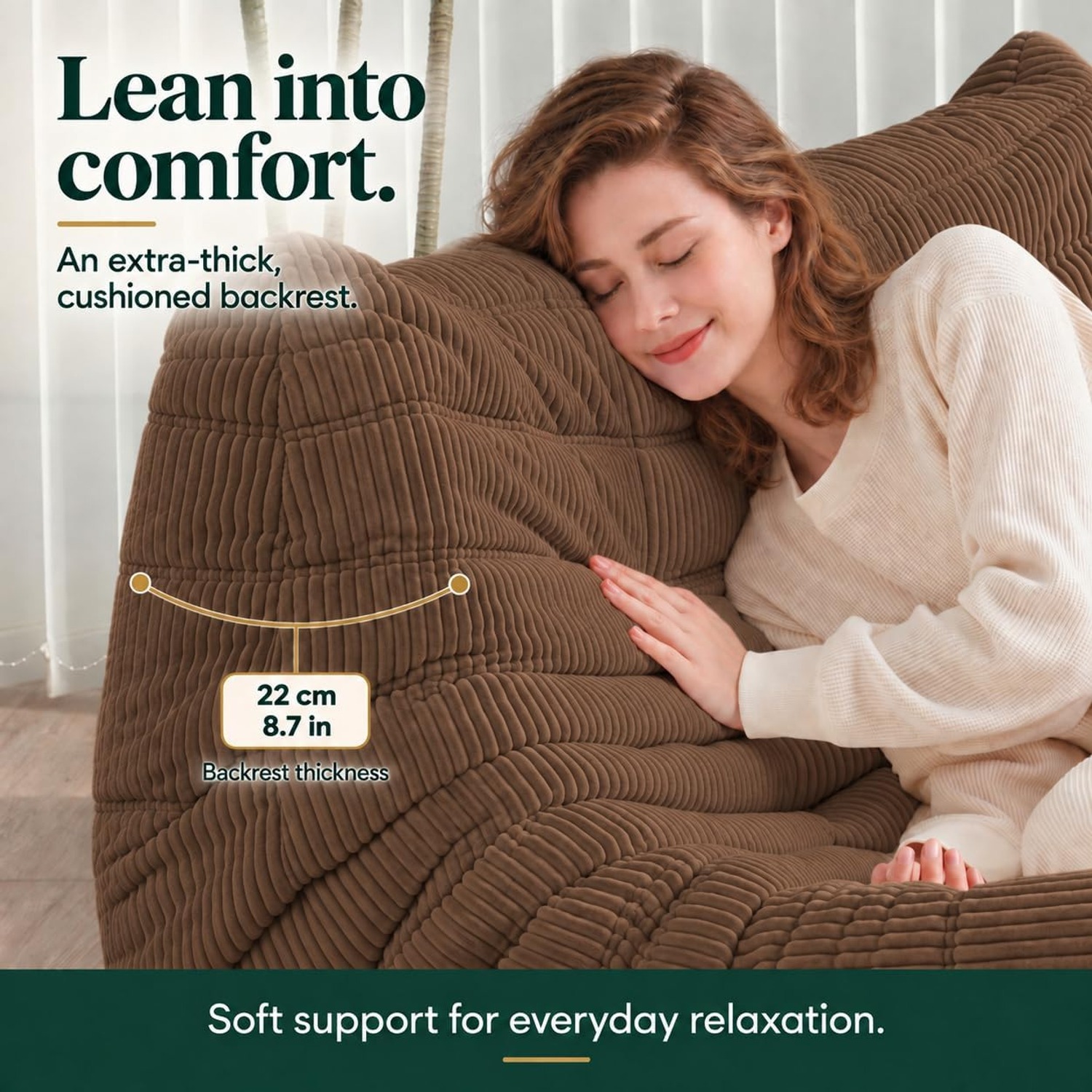
An armless floor loveseat fits that description. It is a two-seater, 95 cm deep, roughly 120 to 125 cm across, with the seat 35 cm off the floor and a 22 cm backrest behind it. Those are the maker's approximate figures. No legs, no arms, no frame. It just sits there.
How a foam floor sofa is built
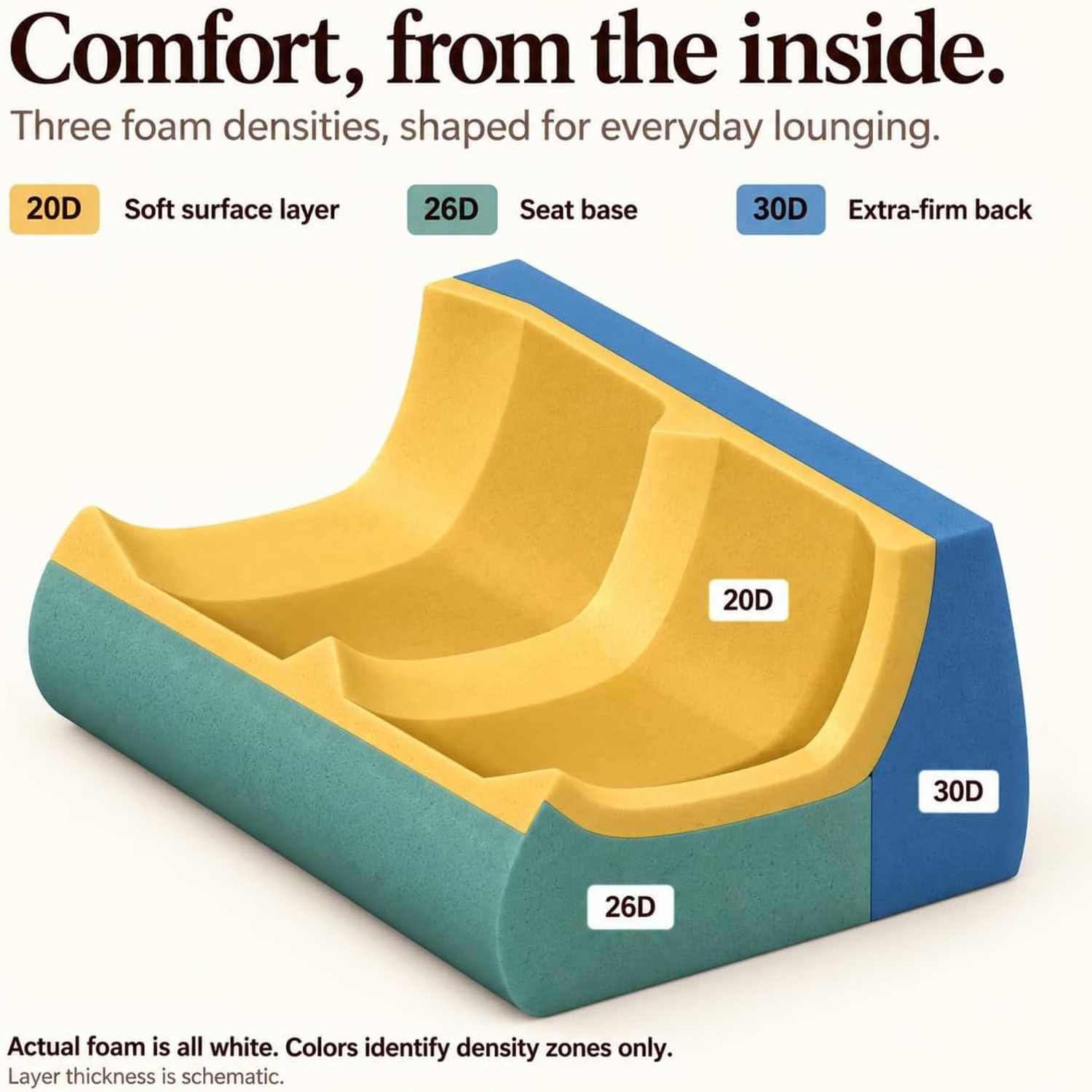
The important detail is inside, not outside. A cheap floor sofa is one block of foam in a bag. Sit on it and your weight pushes straight through the soft top until you bottom out on the floor. That is the moment comfort disappears.
This one layers three foam densities into a single base. The top is 20D, which is the soft bit you feel immediately when you sit. Underneath the seat is 26D, firmer, doing the actual work of holding your weight at the right height. The backrest uses 30D, the firmest of the three, so it stays upright instead of folding over when you lean into it.
That approach is borrowed from mattress design, where soft comfort layers sit over firmer support layers. The logic carries across. You want the surface to feel inviting and the structure underneath to stay honest.
Because it is one continuous piece, there is no seam between the seat and the back for your spine to fall into, and nothing to assemble. The brand lists required assembly as "No" and means it literally. You open the box and use it.
The corduroy question
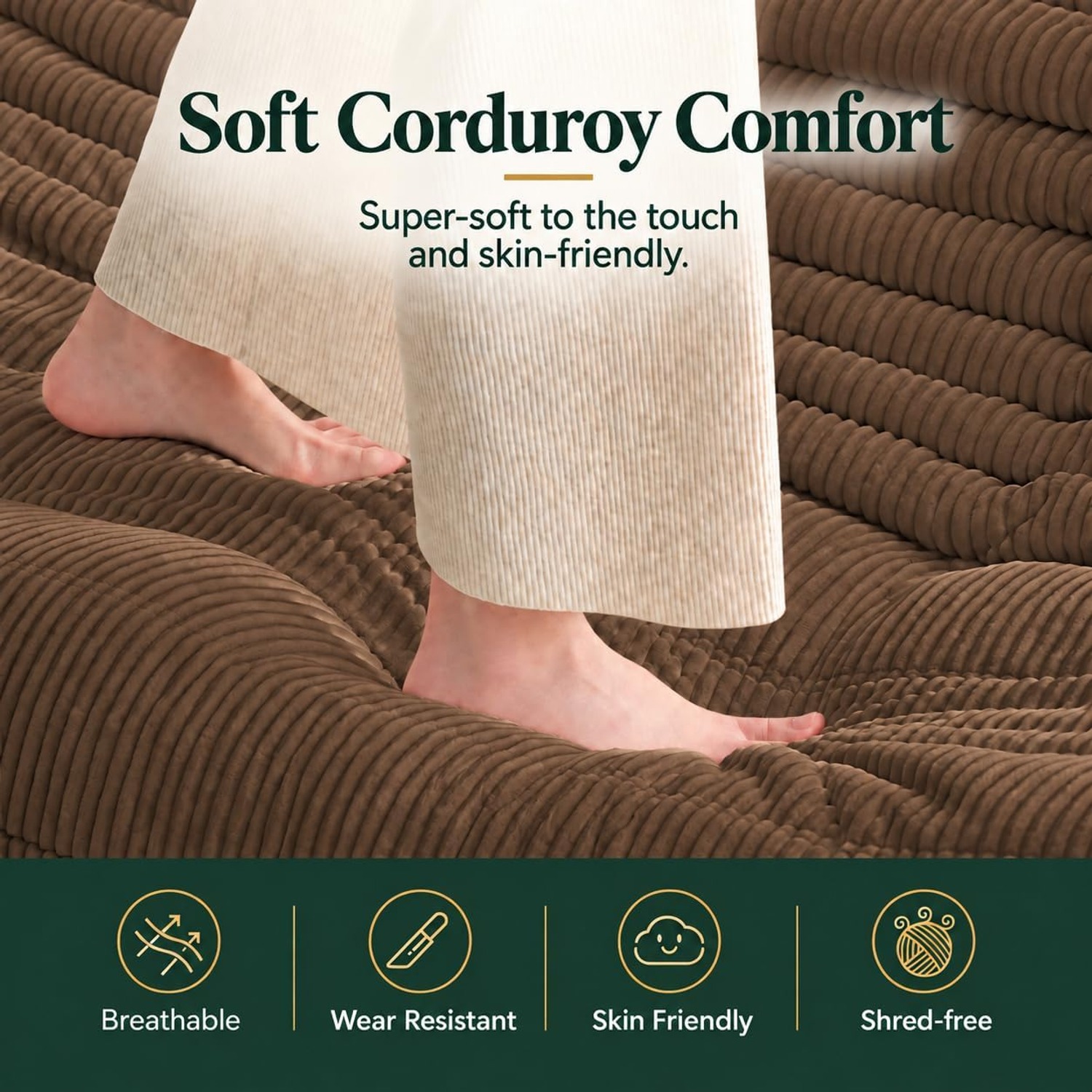
The cover is corduroy, in a colour called Brown Sugar. Corduroy has come back into furniture in a big way, and it is not just fashion. The ribbed pile reflects light along the ridges and holds shadow in the grooves, so a flat shape reads as textured. A plain brown box of foam would look like a prop. The same shape in corduroy looks like furniture.
It also feels warm to the touch, which matters when the thing you are sitting on is at floor level during winter. Smooth synthetics feel cold in a way brushed fabrics do not.
The trade-off is maintenance. Ribbed fabrics collect dust and pet hair in the grooves. A vacuum with a soft brush head sorts that out in a minute, but you do need to actually do it. Ignore it for a year and the colour dulls as grit settles into the pile.
Who this suits
Renters get the most out of it. Nothing is drilled, nothing is assembled, and at 14 kg one person can move it between rooms or into a car. When you move house you are not disassembling anything.
Studio and small-apartment dwellers benefit from the 69 cm overall height. A standard sofa back sits around 85 to 90 cm, which is tall enough to cut a small room in half visually. Drop that to 69 cm and the room reads as larger even though the floor area used is similar. The best low sofa for a small lounge is usually the one you notice least when you walk in.
Gamers and film watchers are the other big group. The 22 cm backrest is the reason. It gives your lower back something firm to press against, which is the difference between an hour of comfort and an hour of fidgeting. Beanbag users who gave up on floor seating often find this changes their mind.
It also works at the foot of a bed, in a child's room, in a converted loft with sloped ceilings where nothing standard-height fits, or in a reading corner where a full armchair would feel heavy.
Who it suits less well: anyone with significant mobility limits. Getting up from a 35 cm seat takes more leg strength than rising from a dining chair. Be honest about that before ordering.
How to choose, practically
Measure the depth, not just the width. Nearly everyone checks width and forgets the 95 cm depth. That is how far it projects into the room from the wall. Mark it out on the floor with tape and live with the tape for a day before you commit.
Think about where your head lands. The back is 69 cm high overall. If you want to rest your head back, this is not that chair, it is a seat for an upright or slightly reclined posture. Add a cushion if you want head support.
Check your floor. The underside is built to grip, which stops the sliding that plagues foam seating on hard floors. On very glossy polished concrete or tile, a thin rug underneath gives extra security. On carpet it will not budge.
Decide on arms honestly. Armless means more usable seat width for a given footprint, and it means two people are not fighting over an armrest. It also means nothing to drape a leg over or balance a mug on. Some people love that openness and some miss the boundary. Know which you are.
Plan the unboxing. It arrives vacuum packed and compressed. Carry the box to roughly where the sofa will live before you cut it open, because moving a fully expanded 95 cm deep sofa through a doorway is harder than moving a flat carton. Give it a day or two to reach full loft.
Looking after it
Vacuum weekly with a brush attachment, running along the ribs rather than across them. It takes a minute and keeps the colour looking true.
Deal with spills straight away. Blot, do not rub, working from the outside of the mark inward so you do not spread it. A damp cloth with a drop of mild detergent handles most things. Then let it dry completely before anyone sits down, because foam holds damp for a surprisingly long time.
Skip bleach and solvents entirely. They strip colour from corduroy and can break down the fibres.
Rotate it occasionally. Turn it end for end every few months so the same spot is not always carrying the same person. It is the single easiest thing you can do to keep the foam even.
Keep it out of long direct sunlight. Any dyed fabric fades, and brown shades show it clearly along the edge that catches the most sun.
And keep it indoors. The maker specifies indoor use, and that is not a formality. Corduroy absorbs moisture and foam dries slowly, so one night on a damp balcony can cause problems that do not go away.
The short version
This is a two-seat foam floor sofa with no frame, no legs and no assembly. Three foam densities give it a soft surface over a firm base, with an extra-firm 30D backrest that keeps you upright. It measures about 120 to 125 cm wide, 95 cm deep and 69 cm high by the maker's diagram, with a 35 cm seat, and weighs 14 kg.
It suits small rooms, rentals, bedrooms, gaming corners and anywhere a full-height sofa feels like too much furniture. It does not suit outdoor use, it is not a sofa bed, and it asks a bit more of your legs when you stand up than a normal chair does.
Measure the depth, give it a day to expand, vacuum it now and then, and it will quietly make the emptiest corner of your home the one everyone heads for.