


The complete guide
The Complete Buyer's Guide to Three Seater Floor Couches
The problem with normal couches in small rooms
Most living rooms are smaller than the furniture designed for them. A standard three seater lounge arrives with arms you never lean on, legs that collect dust, and a back that stands high enough to cut the room in half visually. Push it against a wall and the room still feels crowded. Try to move it and you discover it was built to be assembled in place and never shifted again.
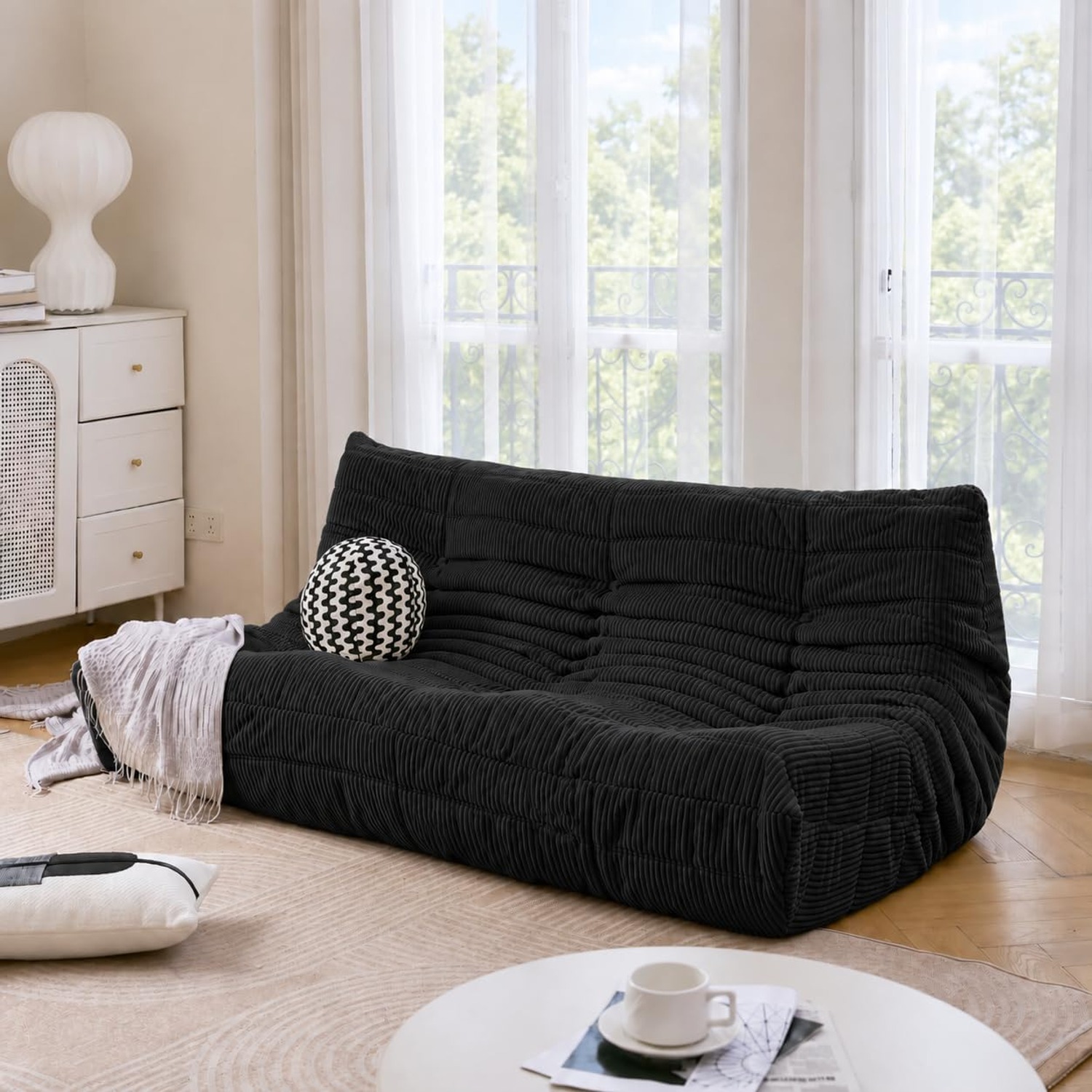
Floor seating solves a different problem to the one most people think. It is not really about saving money or being casual. It is about sightlines. When the tallest thing in your lounge is 70 cm high instead of 90, the walls look further apart and the ceiling looks higher. The window gets more of the room's attention. You notice this immediately when you swap a framed sofa for a low one, and it is the single biggest reason people who try floor seating tend to stay with it.
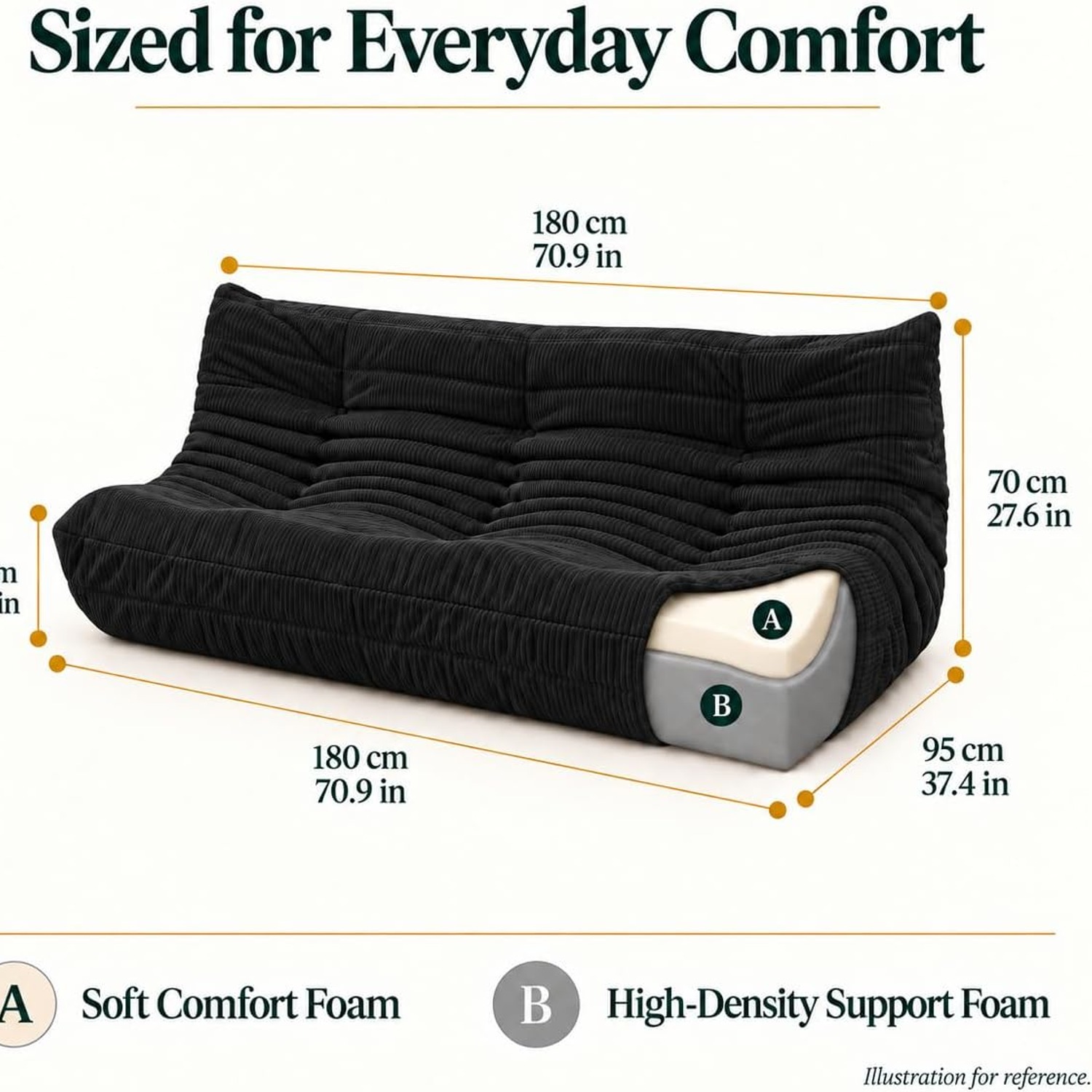
A 3 seater floor couch like this one goes further by removing the arms. Arms are where sofa width goes to die. A 180 cm armless sofa gives you 180 cm of seat. A 180 cm sofa with arms gives you maybe 145 cm of actual sitting space. If you are working with a short wall or a narrow alcove, that difference decides whether three people fit or two.
How a one-piece foam sofa actually works
There is no frame in this product. No timber, no steel, no springs, no legs. The whole thing is shaped foam wrapped in corduroy, and that construction is worth understanding because it changes how the sofa behaves.
The core uses two different foams doing two different jobs. The top layer is a soft comfort foam, and that is what you feel when you first sit down. It compresses easily and spreads your weight across a wider area, which is why the seat feels forgiving rather than hard. Beneath it is a high-density support foam. That layer barely compresses under normal body weight, so it acts like the frame would in a conventional sofa: it stops you sinking through to the floor and holds the shape of the seat.
This is the key difference between a structured foam floor sofa and a beanbag. Bean filling moves. Every time you sit, the beans shift to a new arrangement, and over months they compact until the seat is flat and needs topping up. Shaped foam does not move anywhere. The seat you sit on today is the seat you will sit on next year, allowing for the gradual softening that every foam product goes through.
The backrest here is 22 cm thick and tilts back rather than standing vertical. That thickness matters. A thin back on a floor sofa pushes your spine forward and gets uncomfortable within twenty minutes. A thick, sloped back lets you settle into it the way you would into a proper armchair, which is what makes long sessions on the couch possible.
Underneath, the base is textured to grip the floor. Low furniture has a habit of travelling, especially on polished boards, because every time someone sits down they push it backwards an inch. A grippy base cuts most of that out. On tile or very smooth timber a thin rug underneath will finish the job completely.
Who this suits, and who it does not
Renters get the most obvious benefit. There is nothing to assemble, which means there is nothing to dismantle at the end of a lease. The whole sofa weighs 18.5 kg and flexes, so it goes down a stairwell in a way a rigid three seater never will. People searching for the best floor couch for renters usually have exactly this in mind.
Families with young kids are the other natural fit. Floor seating has no edges to fall from and no hard legs to crack a knee on. Kids will treat it as a crash mat, a fort and a reading spot in the same afternoon, and the foam construction copes with that much better than a framed sofa with loose cushions.
Studio apartments and one-room setups benefit because the sofa does three jobs. It is seating during the day, a lounging spot in the evening, and a reasonable floor bed for one overnight guest. Anyone shopping for the best low seating sofa for a small space is generally trying to get more than one use out of a single piece.
Gamers, film watchers and anyone who naturally ends up on the floor anyway will recognise this shape straight away. If your current habit is sliding off the couch onto a cushion on the carpet, you have already decided you prefer floor height.
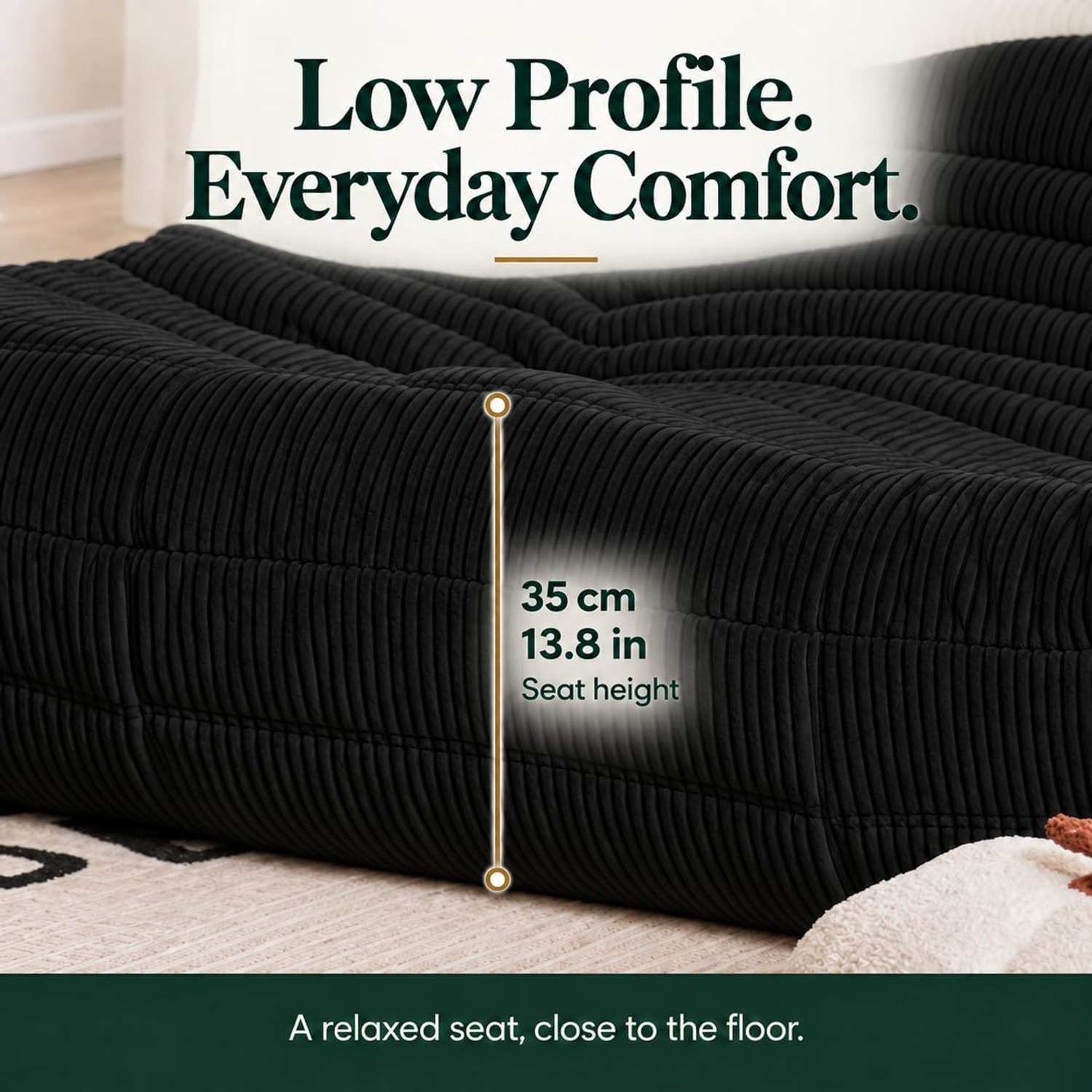
It is less suitable if anyone in the household has trouble getting up from a low position. A 35 cm seat means a real descent and a real push to stand back up. There is no arm to brace against, which is normally a space advantage but becomes a drawback here. If that describes someone in your home, a conventional seat height will serve them better.
It is also indoor only. Foam holds moisture and corduroy fades in direct sun, so patios and decks are out.
How to choose the right size and spot
Start with a tape measure and masking tape. Mark 180 cm by 95 cm on your floor and live with the outline for a day. That rectangle tells you more than any photo will. Pay attention to whether you can still walk past comfortably, whether a door swings clear, and whether the depth leaves room for a coffee table.
Depth is the number people underestimate. At 95 cm this is a deep seat, deliberately so, because floor sofas are made for lounging rather than perching. If your room is narrow, that depth might be the constraint rather than the width. A shallower seat would be easier to fit but much less comfortable to stretch out on.
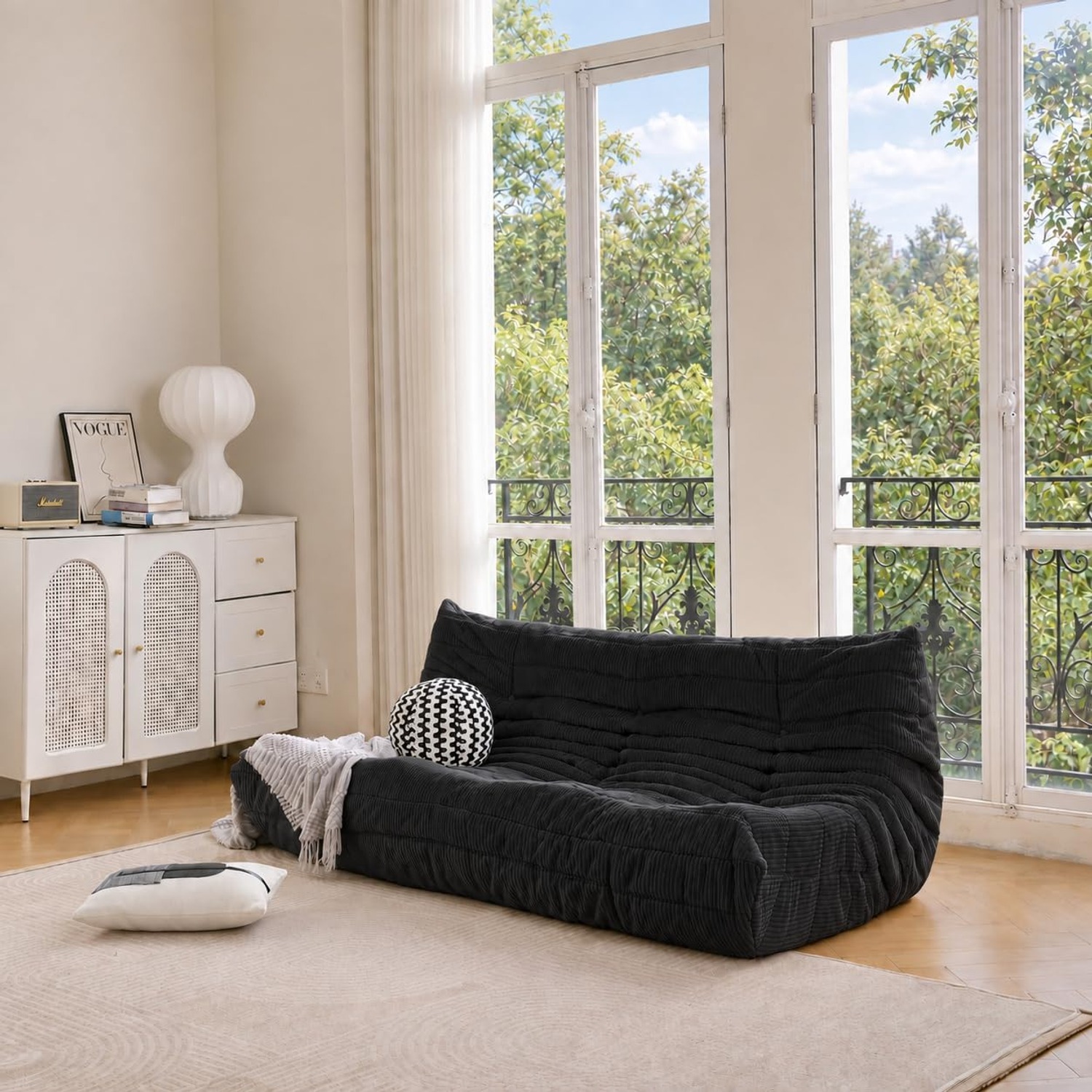
Think about what goes next to it. Because the sofa sits low, a normal side table will tower over the armrest line. A low stool, a floor cushion, a short timber crate or a flat tray on the rug all work better. Lighting is the same story: a floor lamp with a tall neck will shine past your head, so a lower lamp or a wall light gives you better reading light.
Finally, consider the wall behind it. A floor couch with a thick back against a bare wall can look like it is floating oddly. A large framed print hung lower than usual, or a textile on the wall, ties the shape in and makes the arrangement look deliberate.
Unpacking, expanding and first use
Vacuum-compressed furniture always arrives looking smaller than you expect. Cut the outer carton open with the blade kept flat against the cardboard rather than angled in, because the sofa sits close to the box wall. Once the plastic is released the foam starts drawing air back in immediately and you will see it grow over the first hour.
Give it 72 hours in a warm room before judging it. Cold slows the process down considerably, so an unheated garage is the wrong place to leave it. During that time it is fine to pat and flex the foam gently to help air move through the cells, but there is no need to force anything. The shape sorts itself out.
A faint smell from new foam is normal and fades with airflow. Open a window for the first day or two and it will go.
Keeping it looking good
Corduroy is easy fabric to live with, but the ribs do collect dust. Run a vacuum over it with the upholstery brush every week or two and it stays looking fresh. Work along the direction of the ribs rather than across them.
Spills need a quick response. Blot, do not rub, because rubbing drives liquid deeper into the foam and flattens the pile. Cool water with a small amount of mild detergent on a cloth handles most marks. Let the area dry fully before anyone sits back on it, since trapped moisture in foam is the one thing that causes lasting trouble.
Keep it out of direct sunlight if you can. Black fabric in a sunny window will eventually look patchy. Rotating where people sit is the other small habit that pays off, because it spreads the wear across the seat instead of putting it all in one spot.
A throw over the main seating area is a sensible move for households with pets. It washes, the sofa does not.
The short version
This is a one-piece armless foam sofa, roughly 180 by 95 by 70 cm, with a 35 cm seat, a 22 cm back and corduroy upholstery over layered comfort and support foam. It weighs 18.5 kg, needs no assembly, and takes about three days to reach full shape after unpacking.
It suits small rooms, rental homes, kids, studios and anyone who likes sitting low. It does not suit outdoor use, or anyone who finds getting up from the floor difficult. Measure your space first, give the foam its three days, and vacuum it now and then. That is genuinely the whole maintenance plan.