


The complete guide
How To Choose A Corner Floor Sofa Chair
The gap nobody plans for
Floor seating looks easy until you try to turn a corner with it. A straight run against one wall is simple. The trouble starts when the room is L-shaped, or when you want the seating to wrap around a rug, or when the television sits on a diagonal from the main wall. Push two straight pieces together at ninety degrees and you get a wedge of empty floor at the join, plus two pieces that slowly drift apart every time somebody leans.
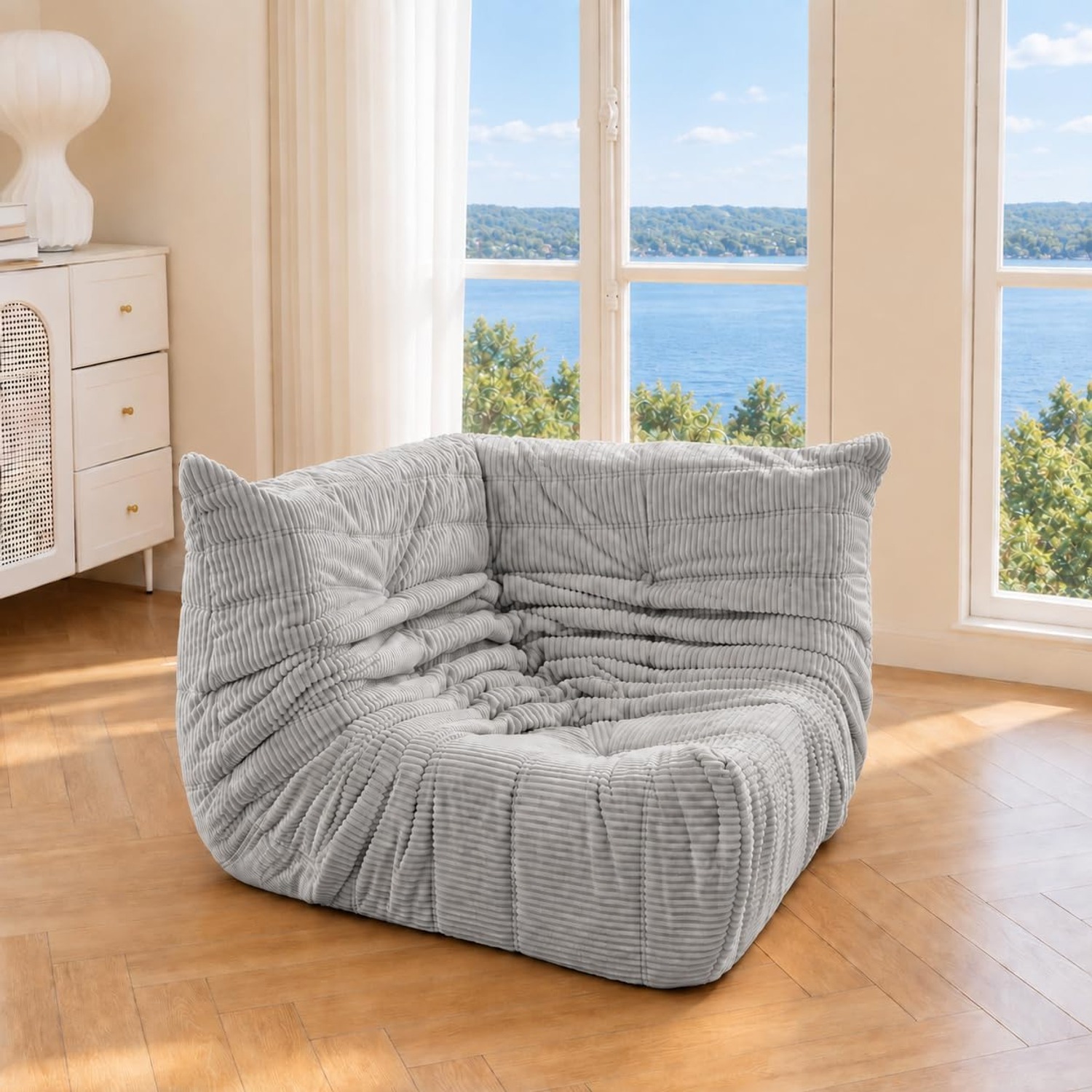
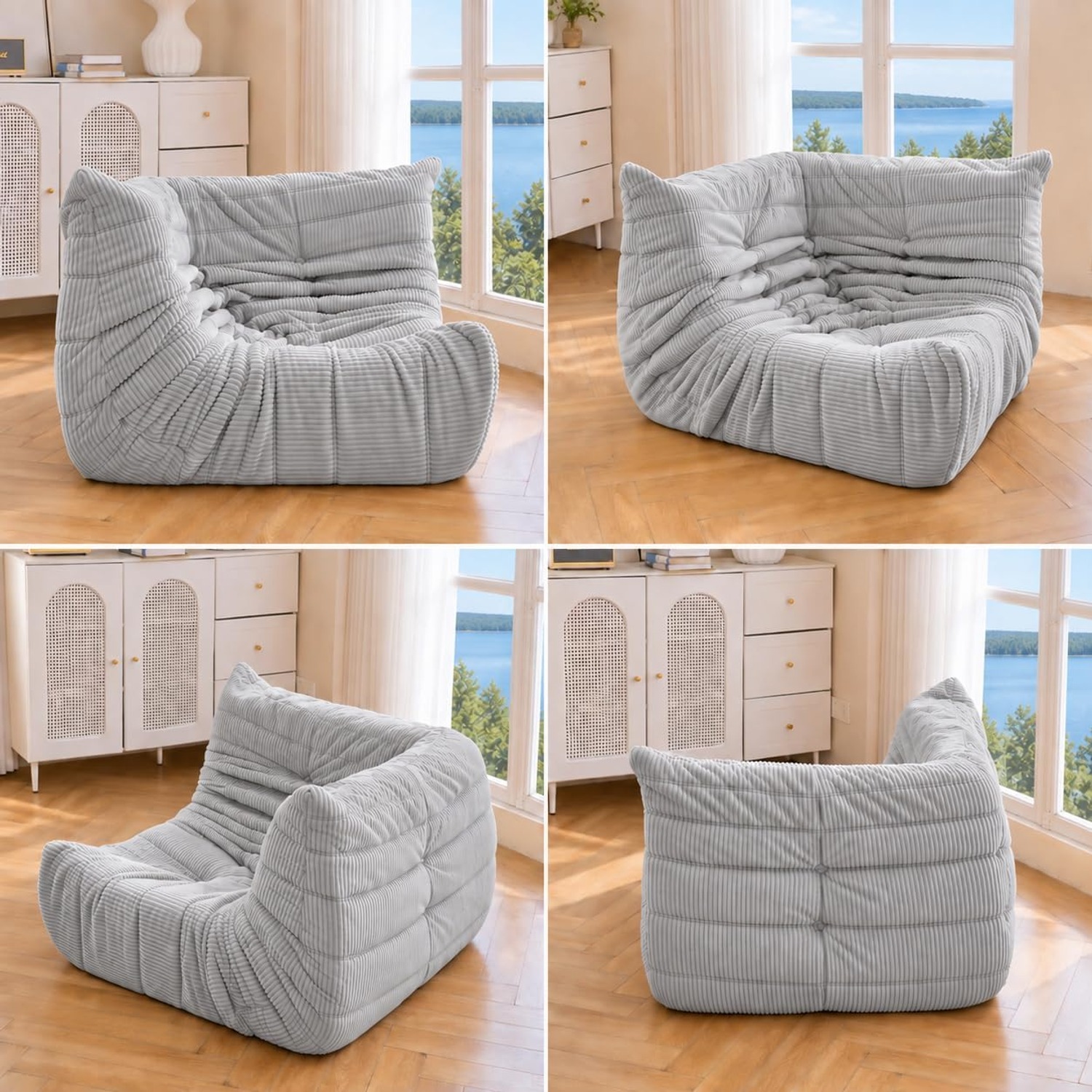
A corner piece is built for exactly that gap. It is shaped to fill the turn so the seating reads as one continuous shape rather than two bits of furniture that happen to be near each other. That is the entire job of this chair. On its own it is a low single seat, and plenty of people use it that way in a reading nook. Between straight Fireside pieces it becomes the hinge that lets a lounge go around a corner.
What is actually inside it
This is a one-piece foam seat. There is no timber frame, no metal legs and no spring unit anywhere in it. Under the cover sits a single block of hybrid foam, which the maker builds by combining foam of differing densities in one slab, borrowing the thinking from mattress design. A firmer section carries the load, a softer layer sits where your body makes contact.
The practical effect of a frameless build shows up in a few small ways. You never find a hard rail with an elbow. There is no joint to creak or loosen after two years of nightly use. The support is consistent right out to the edge, so sitting near the front of the seat feels the same as sitting in the middle. And the whole thing weighs 11.5 kg, light enough that one person can carry it up a flight of stairs or slide it across a room when the vacuum comes out.
The trade-off worth knowing is that foam seating sits low and stays low. There is no mechanism to raise it. If you need a high seat, this is not the category to shop in.
Reading the measurements
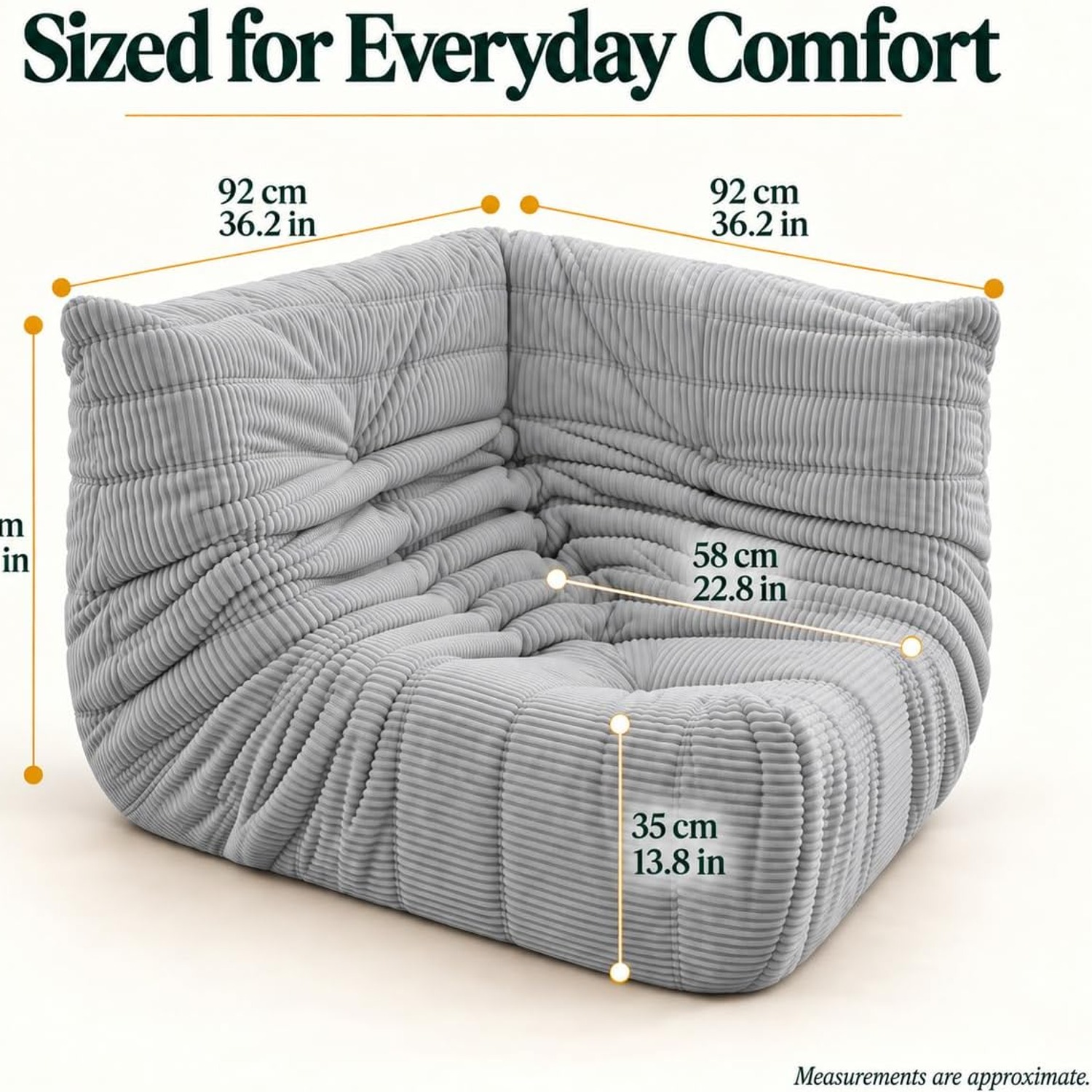
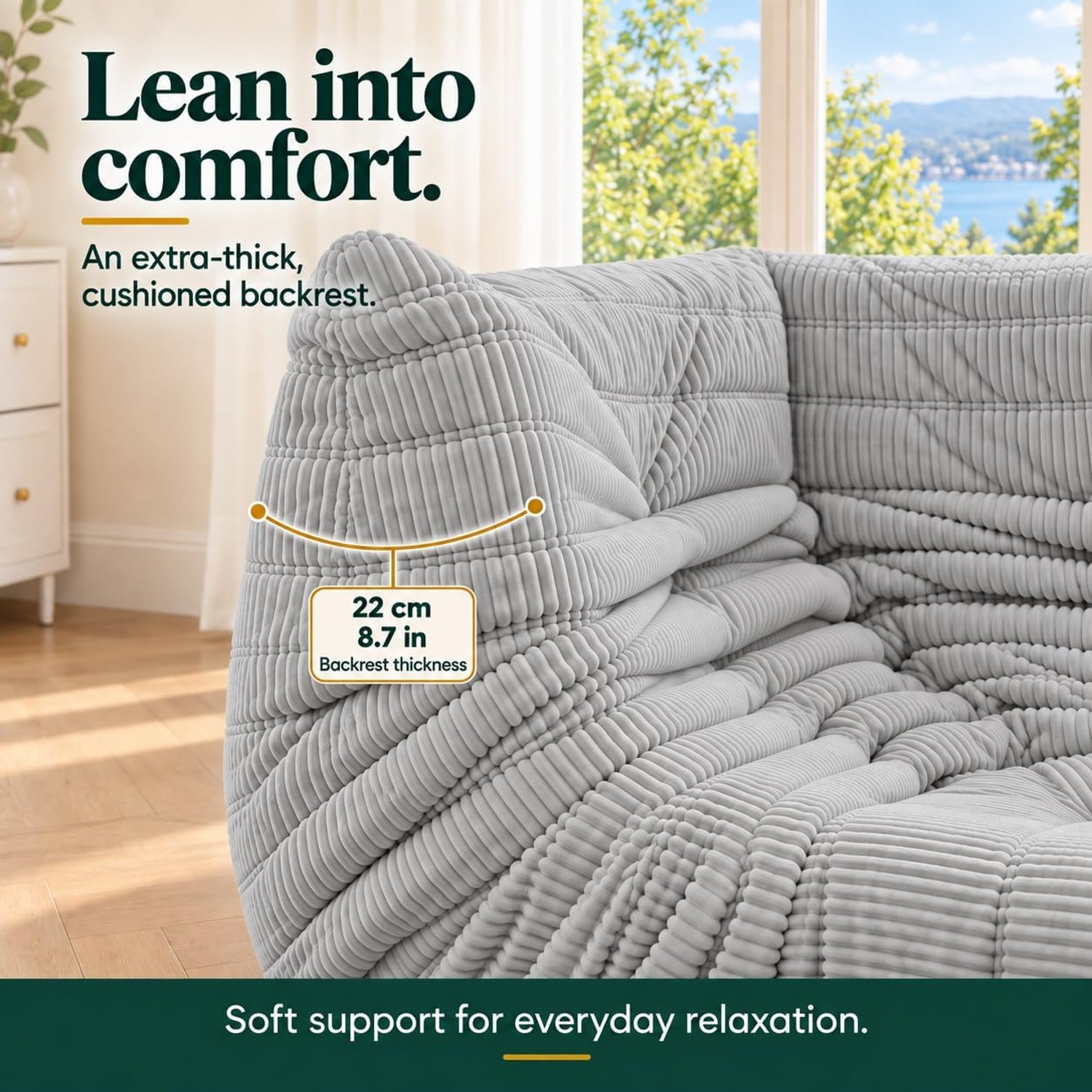
The maker publishes a 92 cm by 92 cm footprint, a 35 cm seat height, a 58 cm seat depth and a 22 cm backrest thickness, all taken from their diagram and all described as approximate. There is no published overall height for this corner piece, so if you are measuring against a window sill or a floating shelf, measure your own space and leave margin.
Those numbers tell you more than they look. A 35 cm seat height is a genuinely low sitting position, a long way below a standard sofa seat of around 45 cm. That is the posture that suits films, floor games, long conversation and a room where you want the sightlines to stay open. It is also the posture that gets harder to leave if your knees complain.
The 58 cm seat depth is the other number to pay attention to. That is deep enough that most adults sit back into the seat rather than perching on the front edge. Shorter sitters sometimes add a cushion behind the lower back to sit more upright, which is an easy fix and worth planning for. The 22 cm backrest gives you something substantial to lean into, which is the main difference between a floor sofa and a glorified cushion.
Fabric, texture and the look of low furniture
The cover is corduroy, cut using a 3D method so the ribs hold their definition around the shaped corner edges rather than flattening out where the fabric turns. The colour is Harbour Grey.
Corduroy earns its place on low seating for a reason that is easy to miss. Low furniture tends to visually sink into a floor, especially on carpet. A ribbed surface catches light along every cord and gives the piece texture and shadow, so it holds its own in a room instead of reading as a lump. It is also soft against bare arms and legs in a way that many hardwearing upholstery fabrics are not.
The honest downside is that ribbed fabric picks up lint and pet hair more readily than a flat weave. A weekly pass with a vacuum brush head or a lint roller handles it. In exchange, corduroy is forgiving with small marks and creasing, which flat fabrics show immediately.
Who this suits
Renters and anyone with a difficult staircase get the clearest benefit, because the piece arrives compressed. A conventional corner unit is a nightmare on a tight landing. A vacuum-packed box is not.
Small apartments do well with it too. Keeping furniture below eye level makes a ceiling feel higher and a room feel wider, and being able to shift 11.5 kg out of the way on a whim is genuinely useful when the same room has to be a lounge on Friday and a yoga mat on Sunday.
Media rooms and games rooms are the other natural home. Low seating puts your eyeline comfortably under a wall-mounted screen, and the deep seat suits sitting still for two hours. People building the best living room floor seating usually run straight pieces along the longest wall and drop this corner where the layout turns.
It suits some people less well. Anyone with knee, hip or back problems will find a 35 cm seat hard to get out of. Households with very young children may want something with a washable cover, since this one is listed as not washable. And it is rated for indoor use only, so no patios and no covered decks where damp can reach it.
Unpacking and the first two days
It ships vacuum packed, exactly like a foam mattress. Cut the packaging open carefully, keeping the blade shallow so you do not score the cover. Then leave it alone.
The foam needs roughly 24 to 48 hours to draw in air and settle into its proper shape. During that window it will look flatter and feel firmer than it should. Put it somewhere with airflow, not shoved against a wall in a closed room, and let it do its thing. Judging the comfort on day one is the most common mistake people make with compressed foam furniture.
A faint smell from fresh foam is normal and fades with ventilation. Opening a window for the first day helps.
Keeping it in good shape
Vacuum the corduroy regularly with a soft brush head, working along the ribs rather than across them. For spills, blot rather than rub, then clean with a cloth dampened in cool water and a mild detergent. Blot dry afterwards and let the spot air out completely before anyone sits on it, because trapped moisture in foam is the one thing that genuinely shortens the life of a piece like this.
Do not machine wash, bleach or tumble dry the cover, and do not soak the foam. Keep the chair out of long stretches of direct sunlight, which fades fabric over months. Rotating how you use it, so the same square of seat is not taking every sitting, keeps the foam recovering evenly.
The anti-slip base is designed to hold position on hard floors. On timber, tile or polished concrete that grip is what stops the seat from creeping backward each time somebody leans into it. If your floor is unusually smooth, a thin rug underneath adds extra hold and a bit of warmth.
The short version
This is the corner piece that lets a run of floor seating turn. One block of hybrid foam, no frame, no legs, no springs, wrapped in 3D-cut corduroy in Harbour Grey, with an anti-slip base underneath. The seat sits 35 cm off the floor with a 58 cm depth and a 22 cm backrest, in a footprint of roughly 92 cm by 92 cm. It weighs 11.5 kg, seats one, is indoor only, needs no assembly and arrives vacuum packed with a day or two of expansion time.
Buy it if you want low, relaxed seating that can go around a corner, and you value getting furniture into the house without a wrestling match. Look elsewhere if you need a high seat, a washable cover, or something that can live outside.